
Serengeti vs Ngorongoro Safari: A Complete Guide & Review
When choosing between the Serengeti National Park and the Ngorongoro Crater, you are looking at two of Africa’s most legendary safari experiences. However, they offer fundamentally different dynamics. The Serengeti represents the boundless freedom of the open savanna, famous for massive scale and the iconic Great Migration. The Ngorongoro Crater is a compact natural amphitheater packed with one of the highest densities of resident wildlife on earth, making it the ultimate spot for rapid, high-probability wildlife viewing.
If you are short on time (1–2 days), Ngorongoro Crater delivers a guaranteed “Big Five” spectacle in a single morning. If you have three or more days to travel and want to lose yourself in an untamed, endless horizon, the Serengeti will completely blow you away. Because they sit directly along the same northern safari circuit in Tanzania, most travelers try to combine both.
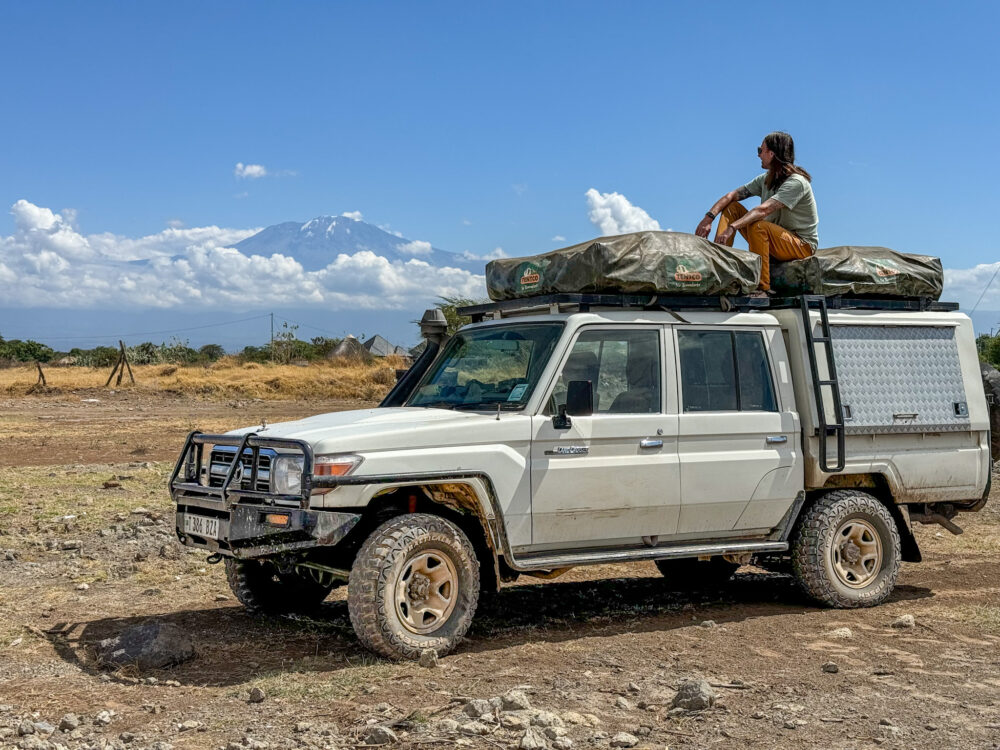
Serengeti vs Ngorongoro Safari
The Case for the Serengeti: Raw, Infinite Scale
The Serengeti is the quintessential African safari that fulfills every postcard dream. It is defined by its sheer space—meaning you have to actively search for the wildlife, which makes the eventual encounter feel incredibly rewarding.
The Great Migration: Over two million wildebeest, zebras, and gazelles move through this ecosystem constantly. Depending on the month, you can witness the dramatic river crossings in the north (July–October) or the massive calving season in the south (December–March).
Predator Paradise: Because the herds are massive, the apex predators follow closely. The Serengeti boasts spectacular lion prides, cheetahs hunting on the open plains, and leopards lounging in the central Seronera Valley acacia branches.
The Experience: It requires long, multi-day game drives. Accommodation ranges from rugged mobile canvas camps that move with the migration to ultraluxury lodges nestled among the rocky kopjes.
The Case for Ngorongoro: The ‘Eden of Africa’
The Ngorongoro Crater is a geological marvel—the largest intact, unfilled volcanic caldera in the world. Descending through the early morning mist down the steep crater walls feels like stepping into a prehistoric “Lost World”.
Guaranteed High Density: Because the 25,000 resident animals are contained within a 100-square-mile bowl, you don’t look for wildlife—it is just there. You can easily check off elephants, lions, buffalo, and hyenas before lunchtime.
The Best Spot for Rhinos: While leopards are rare here, the crater floor is the most reliable place in Tanzania to spot the critically endangered Black Rhino grazing safely in the open.
The Logistics: You cannot stay overnight inside the crater. Safaris here operate as a single-day descent. Lodges line the spectacular, high-altitude crater rim, offering sweeping panoramic views before you drive down into the action.
How to Choose for Your Serengeti vs Ngorongoro Self-Drive Trip
Go to Ngorongoro Crater if: You only have one or two days available, you are traveling with young children who might get restless during long drives, or your primary bucket-list goal is ticking off the complete Big Five rapidly.
Go to the Serengeti if: You have three or more days, you are highly focused on seeing the Great Migration, and you want an immersive, expansive wilderness experience that feels completely wild and untethered from civilization.
The Concierge Recommendation: Don’t pick just one if you can avoid it! Since Ngorongoro sits physically on the road between Arusha and the Serengeti, treating them as a progression is perfect. Spend one morning descending into the concentrated action of the Crater, then hit the road to spend the next 2 to 3 days uncovering the epic scale of the Serengeti.