
Self-Drive Camping Safari Uganda: A Complete Guide
A self-drive camping safari in Uganda offers one of the most liberating ways to experience the “Pearl of Africa” on your own terms. Navigating rugged savannahs, tracking primates in misty rainforests, and pitching a rooftop tent under the African stars is an unforgettable adventure. Unlike its busier neighbors, Uganda’s national parks provide intimate wildlife encounters without the crowds.
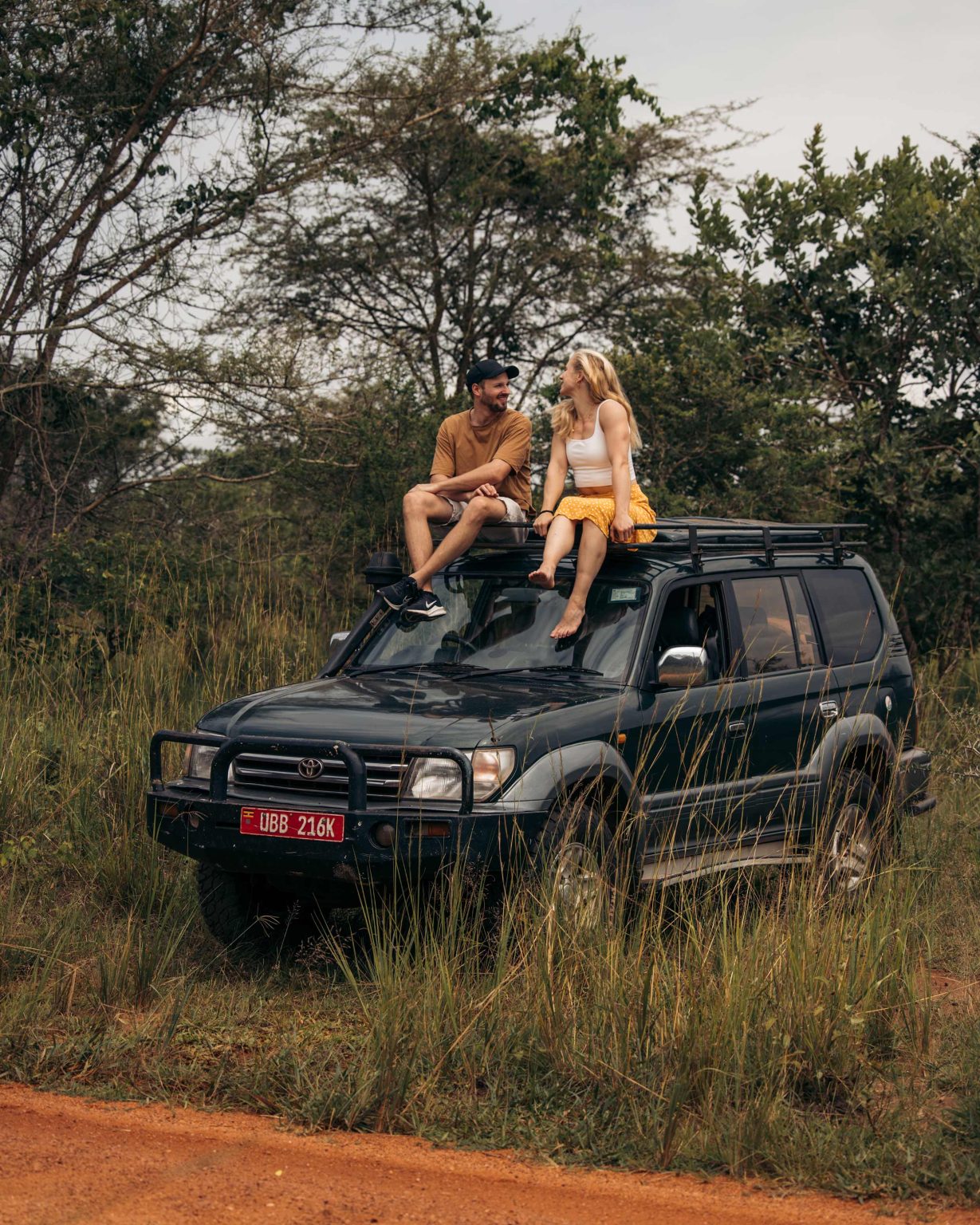
Self-Drive Camping Safari Uganda
Choosing Your 4×4 and Setup
The backbone of your road trip will be a robust, fully equipped 4×4 vehicle. Rental companies like Self-Drive Uganda and Car Rental Drives Africa provide vehicles specially adapted for East African terrains.
The Fleet: The Toyota Land Cruiser (76 or 78 series) is the undisputed king of the bush, offering high ground clearance and dual fuel tanks. Hilux trucks are also common.
The Camping Rig: Most self-drivers opt for a vehicle equipped with a rooftop tent (RTT). They are safe, comfortable, and keep you off the ground away from nocturnal visitors. Rentals typically include a comprehensive kit: a fridge or cool box, gas cooker, folding table, chairs, sleeping gear, and recovery tools.
Border Crossings: If you plan to extend your road trip into Rwanda or Kenya, you must inform your car rental agency well in advance so they can prepare the necessary cross-border paperwork.
⛺ Where to Camp: The Reality of Wild Camping
The concept of “wild camping” in the traditional sense doesn’t really exist or work in Uganda.
No Unregulated Wild Camping: Most land is privately owned or strictly managed by the Uganda Wildlife Authority (UWA). If you pull off the road in a seemingly isolated spot, local communities will materialize quickly out of curiosity. You will always end up paying a small fee to camp on someone’s land.
UWA Public Campsites: Found inside national parks like Queen Elizabeth and Lake Mburo. They are budget-friendly (typically $10–$15 per person per night) and do not require advance reservations—you simply request a permit at the park gate.
Lodge Camping: Many established mid-range and luxury safari lodges allow self-drive campers to park their rooftop tents on their grounds for a fraction of the room cost ($10–$20 per night). This grants you access to clean showers, flush toilets, and often their restaurants or swimming pools.
Bush Camping (Special Campsites): True wilderness camping inside national parks is highly restricted. Currently, it is mostly viable in Murchison Falls National Park. A bush permit costs $40 per person per night and explicitly requires a dedicated UWA armed ranger to clear your site and guard you through the night.
️ Top Campsites Along the Classic Route
Murchison Falls National Park: Red Chilli Rest Camp: Great budget base on the south bank; hippos and warthogs wander right through the camp.
Lake Mburo National Park: UWA Lakeside Campsite: Camp directly on the water’s edge with hippos grunting in front of your tent.
Queen Elizabeth National Park: Mweya Campsite: Perched on the peninsula, offering panoramic views of the Kazinga Channel.
Kidepo Valley National Park: Nagusokopire Campsite: Located in Uganda’s most remote, rugged, and dramatic northern valley.
Jinja (Source of Nile): Nile River Camp: Excellent facilities overlooking the river, perfect for relaxing or setting up rafting.
Essential Tips for the Road
Navigation: Do not rely solely on a single GPS app. Download offline maps on both Google Maps and Maps.me, and download iOverlander to locate reliable campsites and water points.
Safety Guards: Because you are sleeping in active wildlife corridors inside national parks, a security guard or ranger is mandatory or highly recommended at night to ensure large predators or hippos don’t stumble into your camp setup.
Road Realities: Ugandan roads range from smooth tarmac to heavily corrugated dirt tracks and deep mud during rainy seasons. Always verify drive times rather than distances; a 100km stretch can easily take 3 to 4 hours in remote areas.