
Self-Drive Camping Namibia: A Complete Guide
Self-drive camping in Namibia offers an unparalleled sense of freedom, allowing you to traverse towering red dunes, rugged desert mountains, and wildlife-rich savannahs with your accommodation right on your vehicle’s roof. Navigating the country successfully requires a sturdy high-clearance 4×4, careful campsite planning, and strict adherence to local driving rules.
Self-Drive Camping Namibia Itinerary
️ The Classic 14-Day Route
A popular, comprehensive Self-Drive Camping Namibia itinerary forms a loop starting and ending in the capital city, Windhoek:
Days 1–3: Namib Desert & Sossusvlei: Drive southwest via the scenic Spreetshoogte Pass. Camp at Sesriem to get early access to the towering red dunes of Dune 45, Big Daddy, and the stark white clay pan of Deadvlei.
Days 4–5: Swakopmund: Head north to the Atlantic coast. This adventure hub is perfect for marine boat trips, living desert tours, and fresh seafood.
Days 6–8: Damaraland & Spitzkoppe: Head inland into a striking, boulder-strewn landscape. Explore the granite peaks of Spitzkoppe and track desert-adapted elephants across rocky riverbeds.
Days 9–12: Etosha National Park: Spend several days on self-drive game drives across this world-renowned wildlife sanctuary, stopping at floodlit waterholes to watch lions, rhinos, and elephants drink after dark.
Days 13–14: Okonjima Nature Reserve to Windhoek: Stop at Okonjima, home of the AfriCat Foundation, for incredible leopard sightings before heading back to wind down.
Self-Drive Camping Namibia
Choosing the Right 4×4 Vehicle & Gear
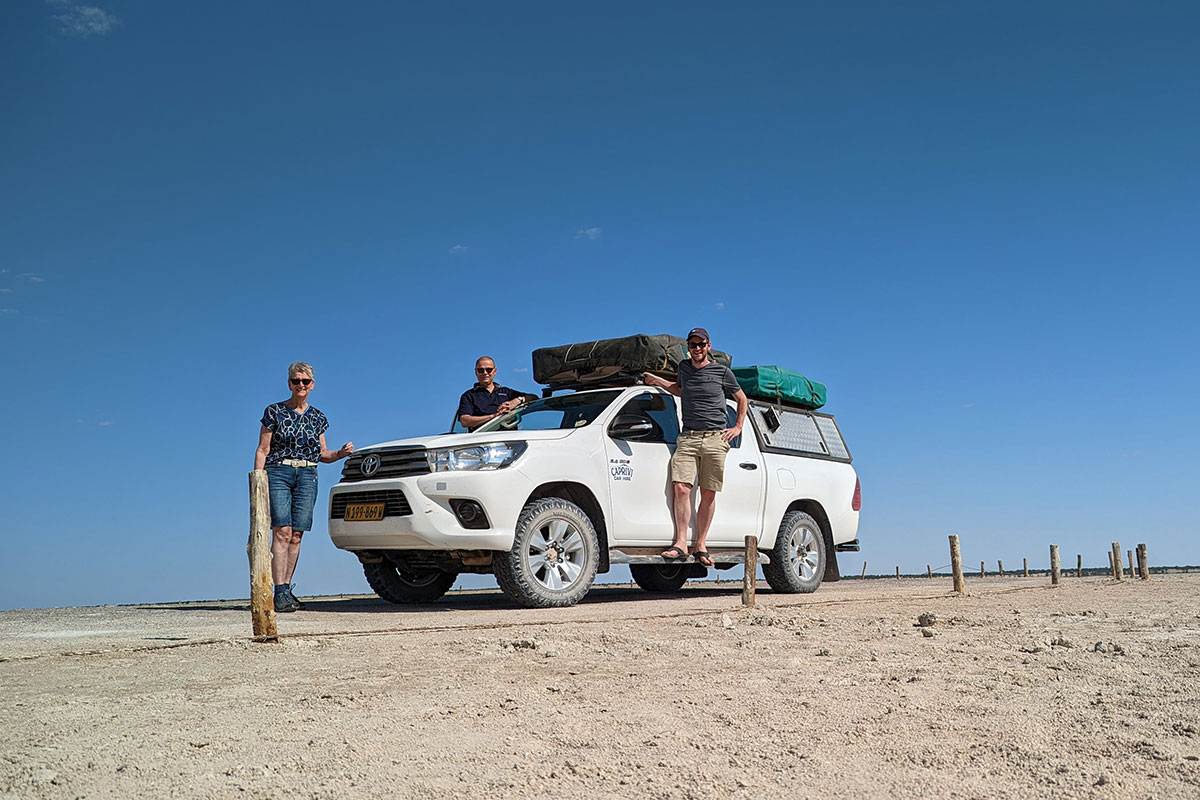
For Namibia’s rugged gravel roads, a high-clearance 4×4 double cab (such as a Toyota Hilux or Ford Ranger) is the standard and necessary choice. Reputable local rental agencies in Windhoek provide fully “camping equipped” vehicles.
What is typically included: One or two built-in rooftop tents with mattresses, a 40-liter fridge/freezer running on a dual-battery system, a gas cooker, a folding table and chairs, cooking utensils, and a braai (barbecue) grid.
Crucial vehicle checkpoints: Always ensure your rental agreement includes two spare tires (punctures are frequent on sharp gravel), a tire pressure gauge, a high-lift jack, a shovel, and an air compressor.
⛺ Exceptional Campsites to Book in Advance
Namibia features excellent camping infrastructure, but the best spots fill up months ahead. Many camps offer luxury private ablution blocks (your own bathroom and dishwashing area on your pitch).
Onguma Tamboti Campsite: Eastern Etosha Border: Private bathroom blocks, a pool, and access to a restaurant overlooking a wildlife waterhole.
Hoada Campsite: Damaraland: Tucked among giant granite boulders with an open-air rock shower and a stunning cliffside splash pool.
Camp Gecko: Spreetshoogte Pass: Incredible raw wilderness vibe with sweeping desert plains and sunset views below the pass.
Sesriem Campsite: Sossusvlei Gate: Staying inside the park gates allows you entry into the dunes an hour before the main outer gates open for sunrise.
⚠️ Essential Rules for a Safe Self-Drive
Never drive at night: There are no streetlights, and massive wildlife or livestock frequently cross the roads. Plan your travel to arrive at your next camp well before sunset.
Adjust tire pressure: Drop your tire pressure when transitioning from paved asphalt to bumpy gravel or deep sand to ensure a smoother ride and reduce the risk of tire blowouts.
Manage Veterinary Control Zones: Namibia has disease-control gates separating the north and south. You are generally not allowed to transport raw red meat or fresh produce from the north to the south. Plan your grocery shopping around major hub towns like Windhoek, Swakopmund, and Outjo.