
Self-Drive Camping Safari Tanzania: A Complete Guide
Self-drive camping in Tanzania is one of the most raw, thrilling ways to experience Africa’s wildlife. Navigating iconic routes like the Northern Circuit (Tarangire, Ngorongoro, Serengeti) in a fully-equipped 4×4 with a rooftop tent gives you ultimate flexibility, though it requires meticulous planning, a healthy budget, and solid off-road driving skills.
Tanzania camping and self-drive safaris offer a rugged, independent way to explore vast wilderness areas like the Serengeti National Park and Tarangire National Park using a fully-equipped 4×4 Land Cruiser with a rooftop tent, local vehicle backup, and pre-planned public campsite permits.
A Tanzania camping safari is an affordable, rugged adventure starting around $250 to $400 per person, per day. Trips typically depart from Arusha and cover famous northern parks like the Serengeti, Ngorongoro Crater, and Tarangire. Expect public unfenced campsites, support crews who set up dome tents and cook hot meals, and close encounters with wildlife at night.
A camping safari is a fantastic option for Tanzania. But it is very vital to go with a recognised operator to ensure a trouble free journey. You will rely on their expertise a lot more than you would on a resort safari. A reputable operator would have a nice set up with good quality tents, a dining tent, great food and cosy camp fires. Your group, driver, guide and cook will leave as a team and start as family. Camping is the ideal way to experience the safari atmosphere. Nothing beats sitting around a fire beneath the stars at the end of a day in the wilderness, recalling the highlights of the day.
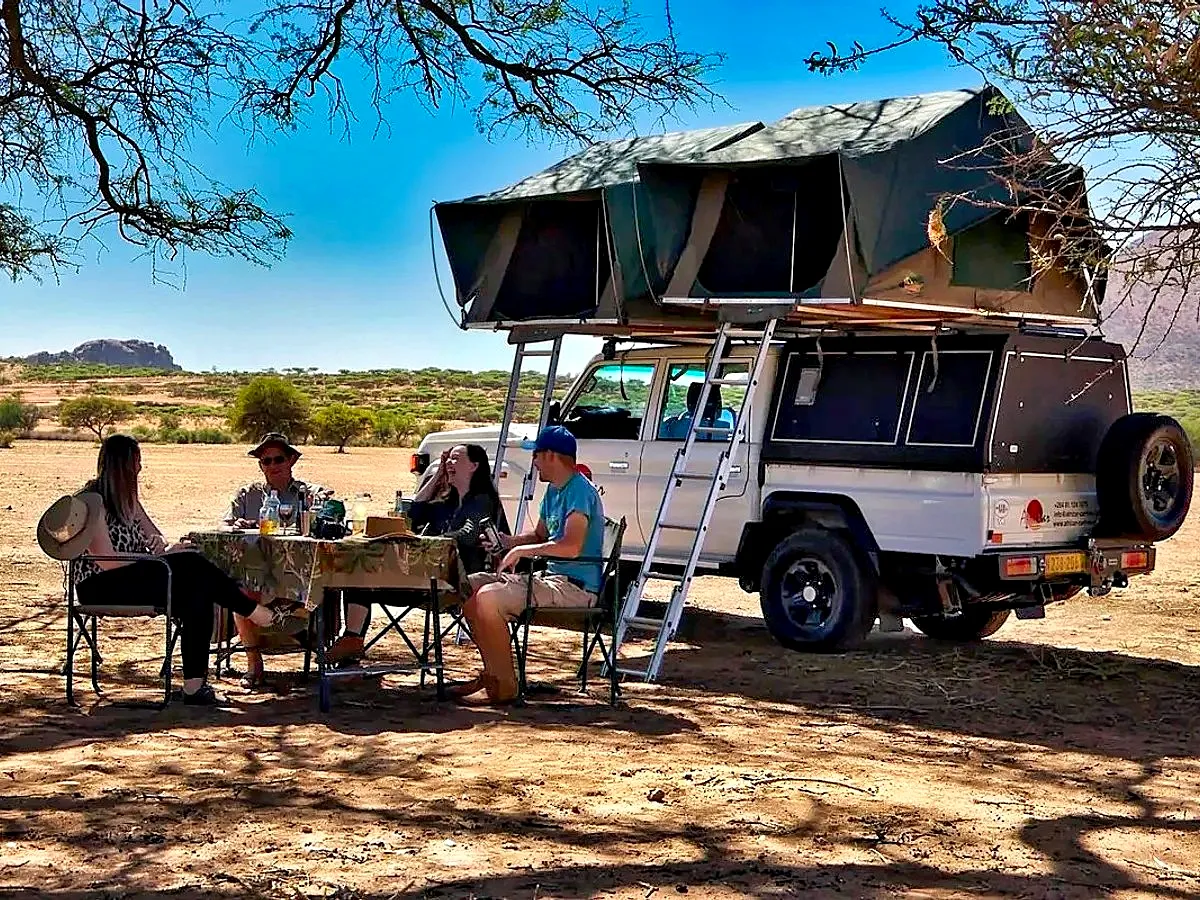
Tanzania Camping & Self-Drive Safaris
1. What can I expect on a Tanzania camping safari?
“A Tanzanian camping safari is a different experience of the African bush as you are as close to nature as possible. You will most likely be visiting either the Northern or Southern safari circuit. You’ll camp in the parks you’re visiting, or just outside them. Food is typically taken care of by a cook and you would be shocked at what they can produce with limited facilities. You may have to pitch your own tent but the team is always ready to lend a hand. You will use the campsite as your base for game drives within the park.
A usual day on safari starts with a wake-up call before dawn. One cup of coffee and you are on your way to look for predator activity. You may return to camp mid-morning for brunch and a siesta through the heat of the day before heading out again for an afternoon drive or other activities. Other days you might head out on a full day’s trip with a packed lunch. The driving time between sites isn’t too long on the Northern circuit, but if you’re going to be in the south, you could be looking at some long driving days between parks. Luckily there is always much to see along the way.”
2. How much will this safari cost?
“It’s hard to say exactly how much a camping safari package in Tanzania costs because it really depends on a lot of things. We recommend budgeting a starting fee of US$200 per person each day (excluding foreign airfares).
It is an extraordinary fortune to get to visit some of Africa’s best parks and reserves, located in Tanzania. As you may imagine, this doesn’t come cheap. Camping is a terrific way to cut down on expenditures and if you don’t mind the rudimentary facilities, it will bring you closer to nature and enhance the safari experience. Level of camping varies with different operators. You should gather as much information as possible on the size of the tents, beds or mattresses, meals, shower etc. Being within or outside the parks also influences the pricing. Again the overall pricing will depend on whether you go on a group tour or choose a tailor made private safari. “Travel in the high season comes at a cost, but you may be able to get a reduced rate in the low season.”
3. What facilities can I expect to find in Tanzanian campsites?
“The public campgrounds at the national parks are very basic. Most feature basic washing blocks, cooking spaces and power. Anything else that is needed is up to the operators. Depending on the type of camping tour you choose you get a number of extras such as a dining tent, lighting etc. Being inside the parks is an advantage as you are perfectly placed for game viewing and you can truly get to immerse yourself in nature. At nite you will hear lions roar and hyenas whoop and the repeated call of the nightjar.
Many of the operators use the campsites outside the national parks. These are privately owned and have less of a bush atmosphere than their park equivalents. They also often have better facilities. There might be a restaurant on site, a small shop to buy drinks and snacks, a bar, better ablution facilities, lights, and so on.”
4. Are the campsites fenced in Tanzania?
“Public campgrounds in national parks and reserves are unfenced. This implies that animals can freely roam around the tents. Predators normally avoid the area throughout the day. Even when tourists are out on game drives, other campsite workers such as cooks for example normally stay behind and their presence keeps most animals away. But at nite, when the campsite is quiet and everyone has gone to sleep, all sorts of critters might wander in. You don’t normally realise it at the time, but you will most likely notice their imprints by the next morning. Most campgrounds contain some resident animals that have been acclimated and appreciate the safety of people around, or the option of scavenge on some scraps. It could be a small troop of warthog, bushbuck or a nocturnal genet. It is always a treat to watch accustomed creatures up close.
Private campsites outside the parks and reserves are normally fenced. These might be better if you’re travelling with little kids.”
5. What are the pros and cons of a Tanzania camping safari?
If camping is your thing then a Tanzania camping safari will be right up your alley. Camping puts you close to nature and camping out in the African bush really takes that to a whole other level. But even if you’re not an avid camper you might want to consider a camping break. Safari tours can be pricey and camping is a good way to cut costs.
Most lodges in the national parks are quite expensive for a number of reasons, having to do with the isolated location and limited occupancy. This means that budget lodge safari travellers frequently have to compromise and stay out of the park. Campgrounds in the parks, in contrast, are generally in beautiful places. Being in the middle of it all is part of the experience. The fun is eating dinner over a campfire and hearing animal noises from your tent. Many respected operators have a really excellent camping set-up. You may be pleasantly surprised by the level of comfort, food and general facilities in camp.
That said, some of us like to have solid walls surrounding us when we go to bed. If you’re not into roughing it, you might want to look into alternative budget safaris. Every time you arrive and leave you waste precious time setting up and packing up camp. If you need creature amenities, such as an en suite shower and space to unpack, then a camping safari might not be for you.”
6. Is it possible to do a mixed safari where only some nights are spent camping?
You can do a mixed safari, with some nites camping and some nites in the comfort of a guesthouse, lodge or hotel. at reality many camping excursions begin with a nite at a hotel. You will have a chance to recover after your overseas travel and prepare for an early departure the next day. For similar reasons the final nite of a camping expedition is also commonly spent in a hotel.
Other camping safaris include a little more time in other lodgings. This is mainly because there are affordable accommodation alternatives just outside some of the parks (for example at Lake Manyara National Park and Ngorongoro Crater) but not outside others. For instance, the only way to see the Serengeti for true is by staying inside the park. In such instances the operator may decide to offer cheap lodgings outside the parks if possible, but camp inside the park if there are no other budget options. This is a wonderful balance if you want to experience some bush camping but not for the whole trip.”