
The Great Migration Mara River Crossings Guide
Mara River crossings are a dramatic wildlife spectacle where thousands of wildebeest and zebras brave swift waters and predators. Key crossing times run from July to October, primarily taking place in the Mara Triangle, Serena, and Kichwa Tembo areas.
Timing and Migration Flow
Peak Months: July through September mark the heavy northern movement from Tanzania’s Serengeti into Kenya’s Masai Mara National Reserve.
Return Crossings: Herds often cross back southward toward the Serengeti between August and October depending on localized rain and fresh grazing.
Behavioral Triggers: Animals gather in large herds on steep banks for hours, building “mob courage” before a single leader dives in to spark the mass crossing.
Major Crossing Locations
Mara Triangle: The western section of the reserve, known for scenic vistas and fewer vehicle crowds.
Serena & Lookout Hill: Highly active zones in the reserve featuring prominent river bends and high vantage points.
Kichwa Tembo / Mara North: Northern points where herds transition into private conservancies.
Sand River: Located on the eastern side, often serving as an initial entry point.
Survival Risks
Nile Crocodiles: Massive populations wait in the deep channels for plunging animals.
Terrestrial Predators: Lions, leopards, and hyenas patrol the steep mud banks.
Currents: Heavy water volume and steep exit points frequently cause drowning or broken limbs.
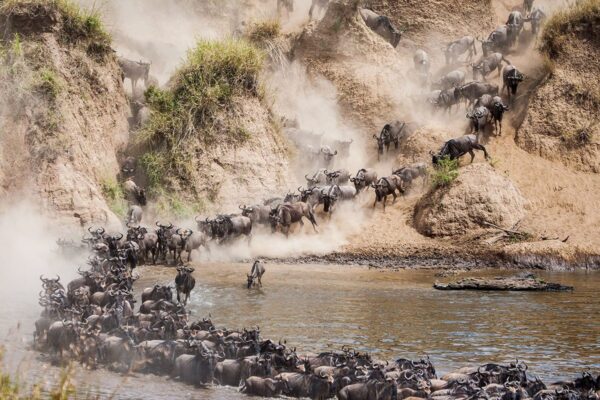
Great Migration Mara River Crossings
A 9-day Great Migration safari focused on the Mara River crossings typically runs from July to October. The classic northern Tanzania route starts and ends in Arusha, routing through Tarangire, the Ngorongoro Crater, and multiple dedicated days in the northern Serengeti (Kogatende/Wagakuria) to watch herds face crocodile-infested waters.